
Guide to Tapping Arm Machines: Definition, Benefits, and Uses
 If you look closely at the metal objects around you—your desk lamp, your computer case, or even the frame of your bicycle—you will notice they are held together by screws. But a screw cannot simply be pushed into a block of metal; it needs a matching spiral groove to grip onto. Creating this groove is a specific manufacturing process, and the machine responsible for it is one of the unsung heroes of the industrial world.
This guide explores the tapping machine. We will break down exactly what it is, how it works, and why it is essential for industries ranging from automotive manufacturing to medical technology. Whether you are setting up a small workshop or managing a large factory floor, understanding this technology is the first step toward better production efficiency.
What Is a Tapping Arm Machine?
In simple terms, a tapping machine is a mechanical device designed to create internal threads inside a hole. This process allows bolts or screws to be fastened securely into a part.
Ideally, a manufacturer creates a hole using a drill. However, that hole is just a smooth cylinder. To make it useful for assembly, a tapping machine drives a specific cutting tool, called a "tap," into the hole. The tap looks somewhat like a screw, but it has sharp cutting edges. As the machine rotates the tap into the hole, it carves out a precise spiral channel.
Why Is a Tapping Arm Machine Important?
Without tapping machines, we would not be able to assemble complex products reliably. While threads can be cut by hand, it is slow and often inaccurate. A machine ensures that the thread is straight and strong.
Evidence of tapping is everywhere. From the casing of your electric fan and the stand of your television to the complex engine block of a car or the frame of a wheelchair, every product that uses screws for assembly has gone through a tapping process. Even materials like acrylics used in display stands or the heavy iron components of CNC (Computer Numerical Control) machines rely on this fundamental step to hold everything together.
The Anatomy of a Tapping Machine
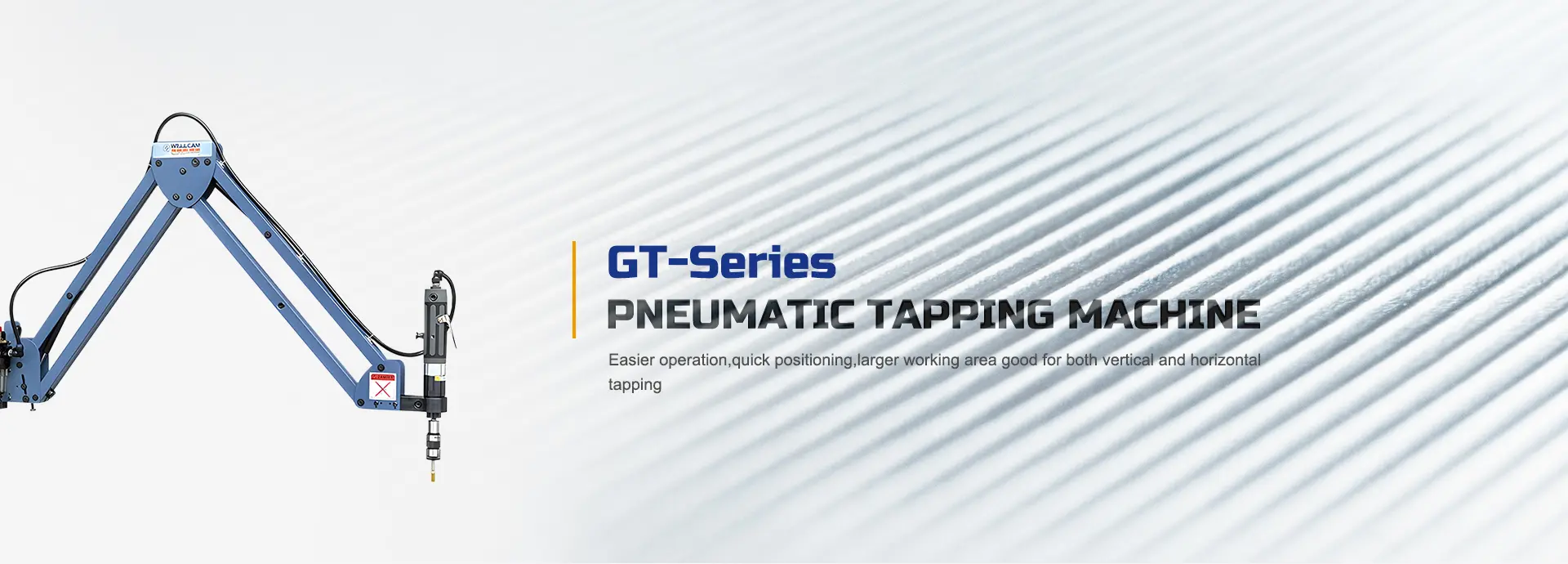
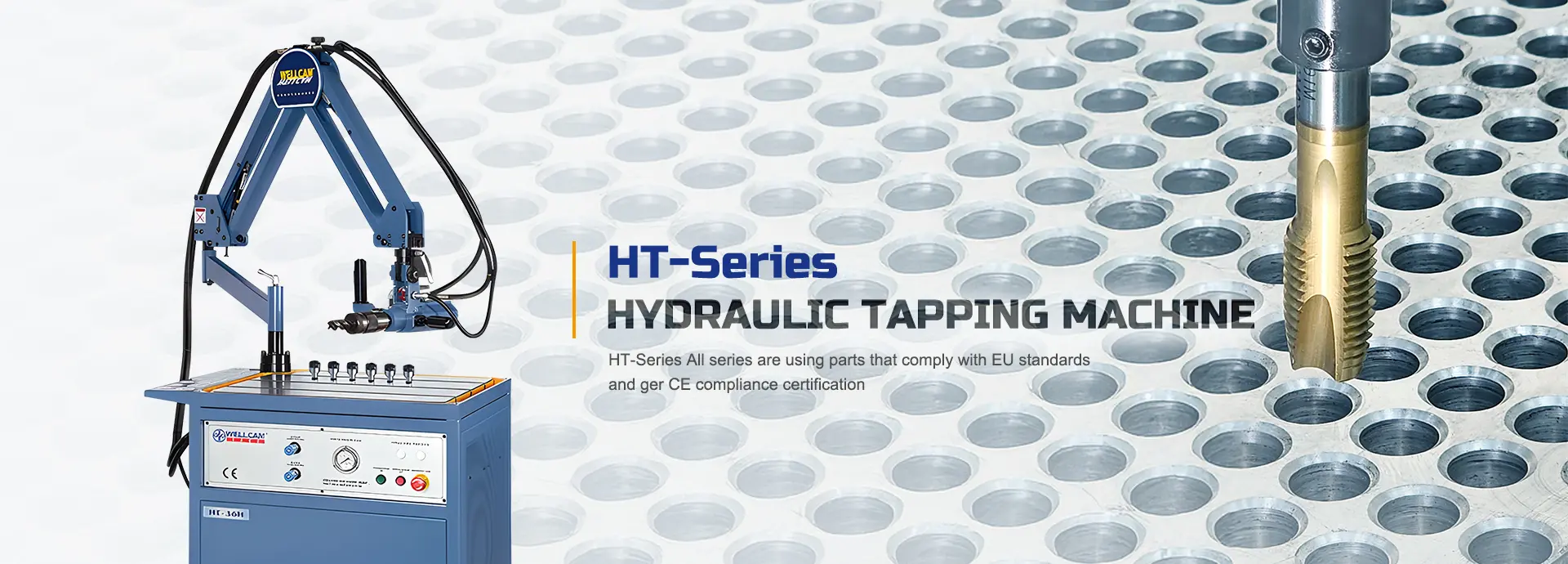
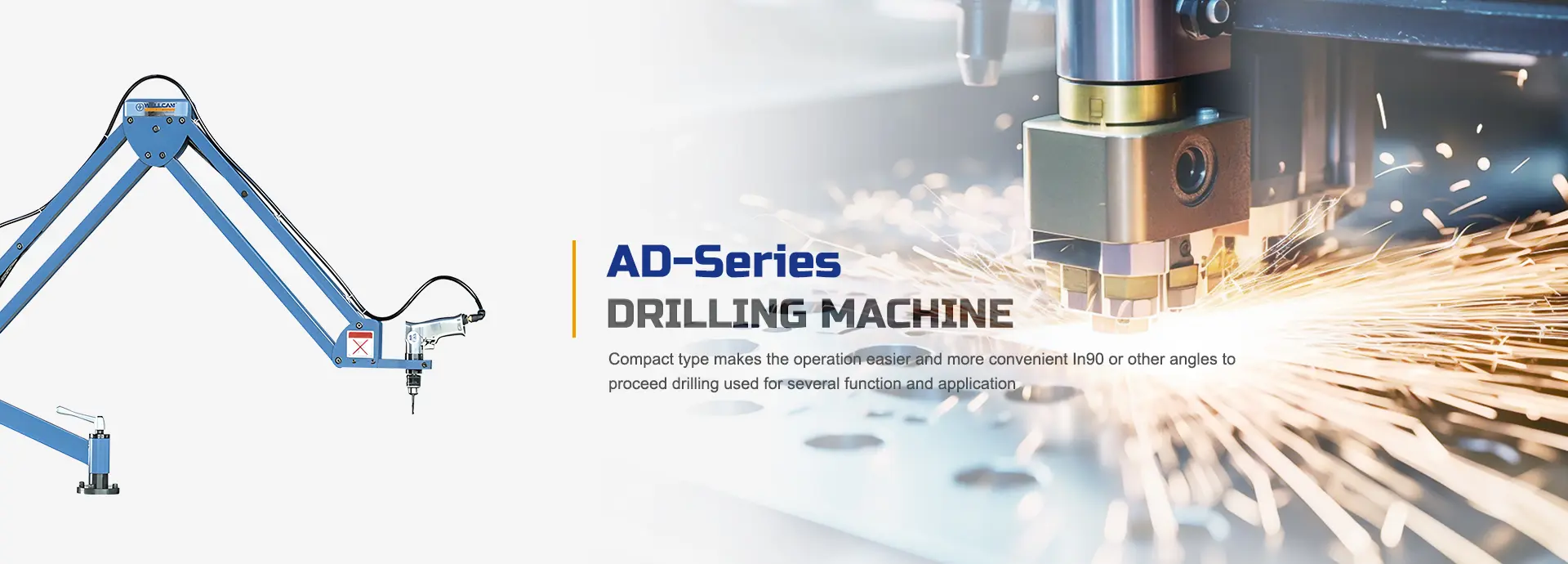
To understand how the machine operates, it helps to look at its main components. While designs vary, most modern "articulating arm" tapping machines share a similar structure designed for movement and reach.
- The Mounting Base: This is the foundation of the machine. It is bolted securely to a workbench or a heavy cart. It provides the stability needed so the machine does not wobble while cutting metal.
- The Articulating Arm: This is the most recognizable part. It functions somewhat like a human arm with an elbow and a wrist. It uses a parallel structure, which means no matter how you move the arm—up, down, left, or right—the "hand" (the spindle) remains perfectly straight up and down. This ensures that the tap always enters the hole at a perfect 90-degree angle, preventing broken tools.
- The Spindle and Motor: Located at the end of the arm, the motor provides the rotational power. This can be powered by compressed air, electricity, or hydraulic fluid. The motor spins the tool to cut the thread and then reverses direction to back the tool out.
- The Tap Holder (Collet): This is the interface between the machine and the cutting tool. It creates a secure grip on the tap. High-quality holders often have a safety feature called a "torque limiter." If the tap hits the bottom of the hole or gets stuck, the holder slips (stops spinning) instead of forcing the tap to break.
Why Use a Tapping Machine? Key Advantages
Using a dedicated machine for threading offers significant benefits over manual work or using a standard drill press.
High Flexibility and Precision
The articulating arm design allows the operator to bring the tool to the workpiece, rather than lifting the heavy workpiece to the tool. This is crucial for heavy parts. Because the arm creates a rigid structure, the tapping precision is extremely high, ensuring every screw fits perfectly.
Quick Changes and Multi-Angle Capability
In manufacturing, time is money. Modern tapping machines allow operators to swap out taps of different sizes in seconds using quick-change chucks. Furthermore, the head of the machine can be rotated. This means you can tap a hole on the top of a box, tilt the head, and immediately tap a hole on the side of the box without moving the heavy metal part.
Automation Integration
Tapping machines can be integrated into larger production lines. They can work alongside conveyor belts or other automated systems to perform repetitive tasks without constant human intervention.
Versatility Across Materials
A single machine can handle a wide variety of materials. By adjusting the speed and the cutting tool, the same machine can thread soft plastics, aluminum, standard steel, and even harder alloys.
Types of Tapping Machines
Tapping machines are generally categorized by how they are powered and their physical design.
Arm Type Machines
These are the most popular in modern factories due to their flexibility. They are further divided by their power source:
- Pneumatic (Air-Powered): These use compressed air to drive gears, which generate high rotational force (torque). They are durable, easy to maintain, and excellent for general industrial use.
- Hydraulic: These use pressurized fluid to drive the motor. They are powerful and operate very quietly. They are ideal for tapping very large holes that require immense force.
- Electric: These use a servo motor. They offer the highest level of control, allowing the operator to set precise depths and speeds digitally.
Traditional Desktop Machines
These look similar to a drill press. The machine is fixed, and the operator must place the part directly underneath it. These are good for small, light parts but difficult to use for large objects.
Magnetic Base Machines
These are portable units with a strong magnetic bottom. You can carry the machine to a massive steel beam, turn on the magnet to lock it in place, and tap holes on-site. This is common in construction and shipbuilding.
Tapping Machine Use in Various Industries
Tapping machines are versatile tools found in almost every sector of manufacturing.
- Automotive Industry: Cars are held together by thousands of screws, but the transmission (gearbox) presents a unique challenge. The gears and internal parts must be heat-treated (heated and cooled) to make them hard and durable. However, this heating process often warps the metal slightly, deforming the screw holes. Automotive manufacturers use tapping machines to re-tap these holes after heat treatment, clearing out any deformations so the final assembly screws can be tightened smoothly.
- Aerospace Industry: In aerospace, precision is critical. Tapping machines are often used here as auxiliary tools. While they may not build the main fuselage, they are essential for creating the "jigs" and "fixtures"—the custom metal frames used to hold airplane parts in place while they are being built.
- Machinery and Mold Making: For companies that build other machines or metal molds, the tapping machine is a daily workhorse. It increases production efficiency by allowing operators to quickly finish the hundreds of holes required for a single mold base without fatigue.
- Electronics Industry: The electronics sector uses tapping machines to build the production equipment itself. Additionally, they are used to improve production techniques, creating precise mounting points for circuit boards and casings.
- Medical Equipment: Medical devices require extreme reliability. Tapping machines are used to machine the assembly holes for everything from dental chair components and hospital beds to the complex frames of CT scanners and wheelchairs.
Future Trends in Tapping Technology
As factories become smarter, the humble tapping machine is evolving.
The future of tapping lies in integration. We are moving toward systems where tapping operations are synchronized with laser cutting machines. Imagine a sheet of metal being cut by a laser, and immediately, a tapping unit creates the necessary threads before the part even leaves the table.
Furthermore, we will see a rise in robotic arm integration. While robotic systems are currently more expensive than manual labor, the push for "unmanned factories" (fully automated plants) makes this necessary. AI-driven robots can perform tapping operations with perfect consistency 24 hours a day, justifying the cost through sheer volume and reliability.
Conclusion
The tapping machine is a foundational tool in the manufacturing world. From the flexibility of the articulating arm to the raw power of hydraulic systems, these machines ensure that the products we use every day can be assembled securely and efficiently. Whether in the automotive, medical, or electronics sector, the ability to create precise internal threads is vital.
Investing in a high-quality tapping machine reduces broken tools, saves operator time, and guarantees product quality. For a solution that combines durability with precision, we recommend exploring the options available from WELLCAM. With a global reputation for excellence, we provide a customized solution for your factory's specific needs.
WELLCAM is one of the leading tapping arm machine manufacturers in Taiwan. We offer a complete range of pneumatic, hydraulic, and electric tapping solutions designed for real industrial applications. To discuss your requirements and find the right machine for your production line, contact the WELLCAM team today.