
How to Choose the Best Tapping Machine
 In the world of manufacturing, cutting metal into the right shape is only half the battle. A laser cutter can slice a steel sheet into a precise bracket, and a CNC machine can carve a complex block, but these parts often remain useless until they can be assembled. This is where the tapping machine comes in.
Tapping is the process of creating threads inside a hole so that a screw or bolt can be fastened into it. Without this crucial step, the various metal components of a machine or device could not be securely held together. Whether you are building automobiles, electronics, or heavy machinery, the tapping machine is the bridge between loose parts and a finished product.
However, not all machines are the same. Choosing the wrong equipment can lead to broken tools, damaged parts, and slowed production lines. This guide will explain how to find the best tapping machine for your specific needs by analyzing materials, production volume, and machine performance.
Why Choosing the Right Tapping Machine Is Important
It might be tempting to buy a single "one-size-fits-all" machine to handle every job in the factory, but in metalworking, efficiency comes from specificity. A machine designed for heavy steel beams is not suitable for delicate electronics, and vice versa.
Using a machine that is too weak for the job creates immediate risks. If the machine lacks the power (torque) to turn the cutting tool smoothly through hard metal, it may stall or jerk. This creates uneven threads, which means screws will not fit tightly during assembly. Worse, the stress often causes the "tap" (the threaded cutting tool) to snap off inside the hole. Removing a broken tap is difficult and time-consuming; often, the entire metal part is damaged and must be thrown away as scrap.
Conversely, using a massive, heavy-duty machine for small, delicate work is slow and inefficient. Large machines have heavy, articulating arms that are more difficult to move and position. If an operator needs to thread thousands of small holes, dragging a heavy arm back and forth creates unnecessary physical strain. This leads to operator fatigue, which slows down production and increases the chance of human error.
Selecting the appropriate model ensures that your workflow remains smooth and efficient. The right machine acts as a natural extension of the operator's hand. It allows them to work quickly without fatigue, significantly reduces the cost of replacing broken tools, and ensures that every screw hole is perfectly threaded so the final product can be assembled without issues.
Key Factors in Choosing a Tapping Machine
To find the best equipment for your workshop, you need to look at six specific factors. Understanding these will help you match the machine to your daily workload.
1. Processing Materials and Thread Specifications
The first thing to consider is what you are cutting. Tapping machines are versatile, but they have physical limits based on the hardness of the material.
Most standard metals, such as aluminum, mild steel, and copper, are easy to tap. However, materials that have been "heat-treated" are different. Heat treatment is a process used to harden metal. Once a material has been hardened, it becomes too tough for most standard tapping machines to cut. Trying to tap hardened steel will usually result in the tap snapping off inside the hole.
You must also consider the "thread standard" your clients require. In the global market, there are four main standards: JIS (Japanese Industrial Standard), DIN (German Institute for Standardization), ISO (International Organization for Standardization), and ANSI (American National Standards Institute). Different countries and industries prefer different standards. You need a machine and tool holding system (collets) that can adapt to these different specifications easily.
2. Production Needs and Batch Size
The volume of work you do determines the speed you need. In the manufacturing industry, the most common tapping sizes range from 3mm to 10mm (often written as M3-M10). Because these holes are small, they don't require a massive force, but they do require speed.
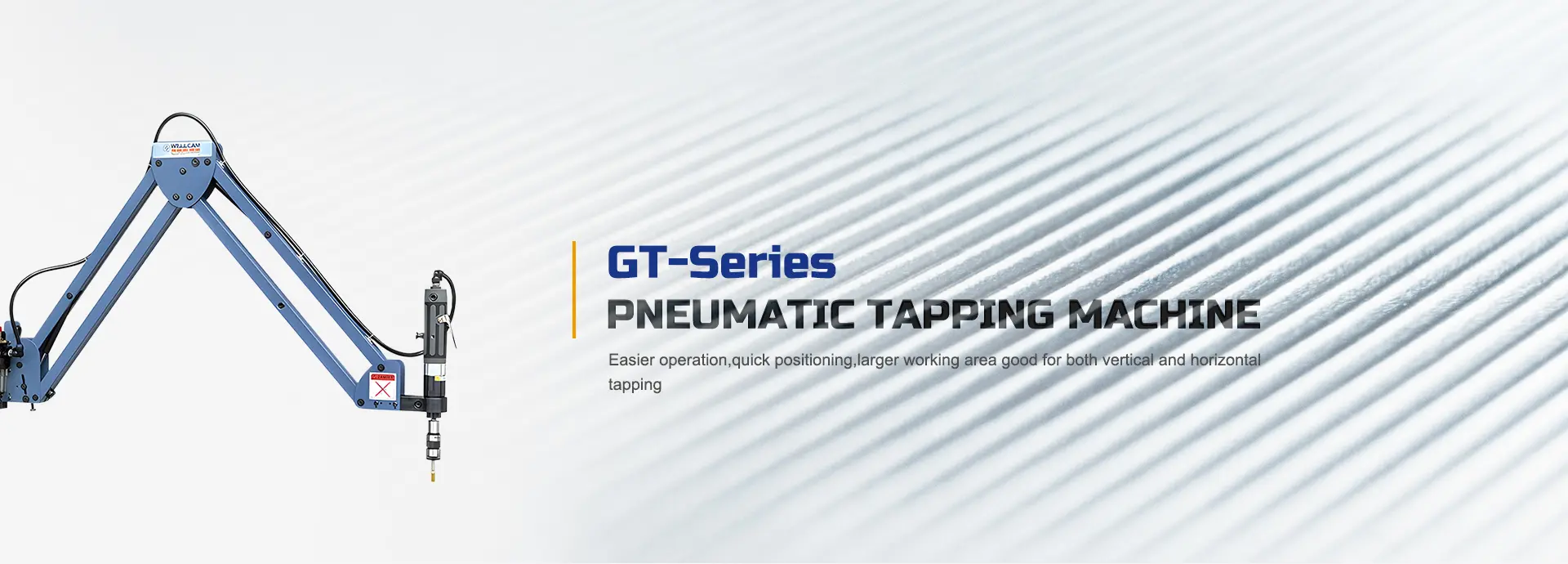
If your factory primarily handles these standard sizes (M3-M10), you need a high-speed machine. For example, the WELLCAM GT-10 series operates at a speed of 700 RPM (Revolutions Per Minute). This high speed allows the operator to finish holes quickly, significantly increasing daily output.
However, if you occasionally need to tap larger holes, like M12 or M16, speed becomes less important than power. Tapping a larger hole requires more force. In this case, you must sacrifice some speed to gain torque. A model like the GT-12 (400 RPM) or GT-16 (300 RPM) turns slower, but it pushes harder, allowing it to cut through the material without stalling.
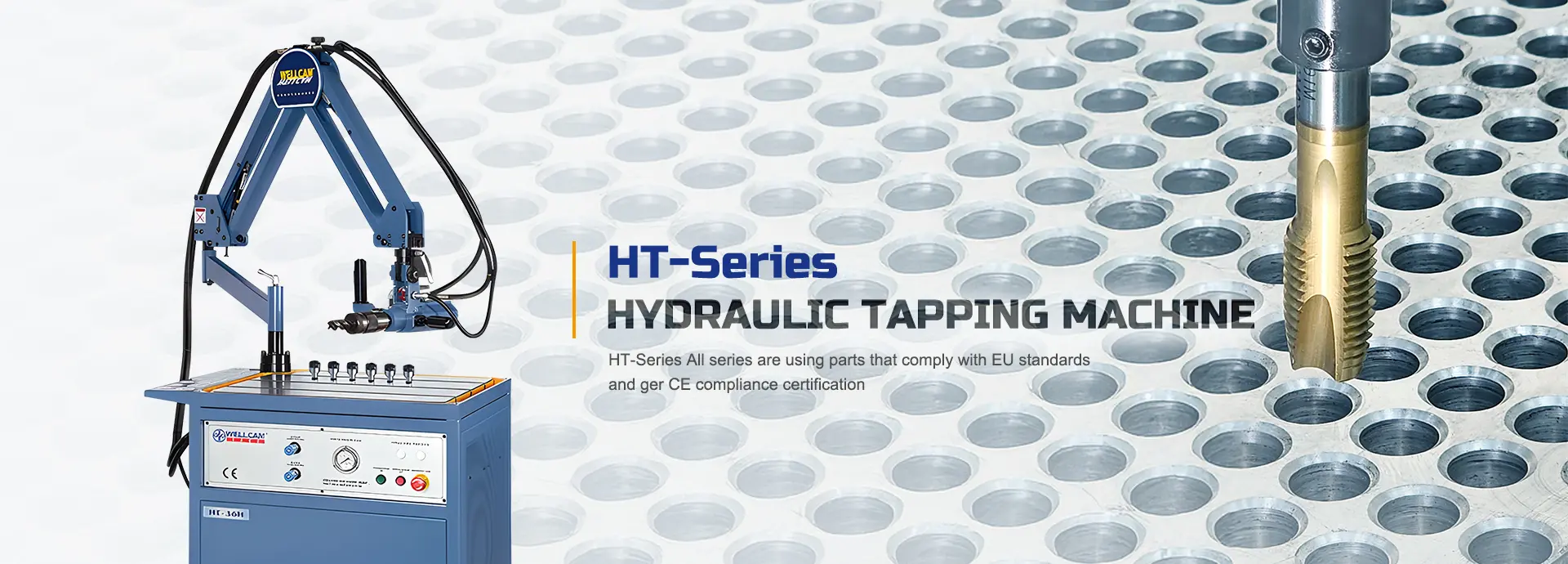
If your work involves very large, heavy-duty threading, such as M16 up to M36, standard machines will not work. You would need a specialized heavy-duty unit like the HT-36 series, which is designed specifically to handle the immense resistance of large-diameter tapping.
3. Machine Performance: Speed vs. Torque
Performance is largely a balance between speed (how fast it spins) and torque (the twisting force it applies).
When a tapping machine creates threads, it faces resistance from the metal. Pneumatic (air-powered) tapping machines handle this efficiently due to the natural physics of air motors. Unlike electric motors that might need sensors to adjust, an air motor reacts physically to the load. If the tap hits a hard spot and resistance increases, the motor naturally slows down. As it slows, the air pressure builds up to generate more torque (twisting force), allowing the tool to push through the tough material without stalling.
When choosing a machine, you must look at the "upper limit" of its capability. For example, if you need to mass-produce parts with M10-size holes, you might look at the GT-10 series, which is rated up to M10. However, M10 is the maximum limit for that machine. Running a machine at its absolute limit all day can cause wear.
In this scenario, the smarter choice is to upgrade to the next level, such as the GT-12 series. Even though the GT-12 is rated for larger holes, using it for M10 work means the machine is operating comfortably within its power range, not at its limit. This increases the machine's lifespan and efficiency.
4. Operational Convenience
Time spent setting up the machine is time not spent working. The best tapping machine should be easy to move and position. Look for an articulating arm—a mechanical arm that holds the tapping head. This allows the operator to bring the tap to the hole instantly, regardless of where the workpiece is on the table. This "floating" movement eliminates the need to lift or clamp heavy metal parts for every single hole, which is a major time-saver.
5. Budget and Long-Term Maintenance
The initial price of the machine is only one part of the cost. You must also consider the long-term costs. A cheaper machine might use lower-quality internal gears or seals that wear out quickly, leading to downtime and repair bills.
Look for a machine known for durability with fewer consumable parts. Pneumatic tapping machines are often preferred here because they have fewer complex electrical components than fully electric CNC systems, making them easier and cheaper to maintain over many years.
6. Manufacturer Reputation and Support
Finally, consider where the machine comes from. A machine is an investment. You want to buy from a manufacturer that has a track record of success and offers support if something goes wrong. A company that sells globally usually indicates that its quality meets various international standards.
Advantages of WELLCAM's Tapping Machines
When balancing these six factors—versatility, power, ease of use, and reliability—WELLCAM stands out as a premier choice.
WELLCAM tapping machines are currently sold and trusted in manufacturing hubs around the world, including France, Belgium, Ukraine, Italy, Turkey, India, Indonesia, Malaysia, South Korea, China, and Taiwan. This global presence is a testament to the quality and reliability of their equipment.
At WELLCAM, we offer a wide range of models to suit every specific need, from high-speed production to heavy-duty industrial threading. Their most popular models include:
- Vertical Series: GT-10VL, GT-12VL, GT-16VL, GT-20VL
- Horizontal/Vertical Series: GT-10HL, GT-12HL, GT-16HL, GT-20HL
- Heavy Duty Series: HT-24V, HT-36HL
Whether you need the high RPM of the GT-10 series for fast electronics work or the crushing torque of the HT-36 for heavy steel construction, WELLCAM has a specialized solution.
Frequently Asked Questions
Here are answers to common questions manufacturers have when selecting the best tapping machine.
Q1: I need to mass-produce small threads (sizes M3 to M6). Which model should I use?
For high-volume production of small threads, speed is your priority. The WELLCAM GT-10 series is the best choice. With a speed of 700 RPM, it allows operators to work rapidly, maximizing your daily output capacity.
Q2: I need to tap M10 or M12 threads in Stainless Steel. Which model is best?
Stainless steel is harder and tougher than mild steel or aluminum. It requires more torque (twisting force) to cut without seizing. For this application, you should choose the WELLCAM GT-16 series. Its lower gear ratio provides the extra power needed to handle hard materials like stainless steel smoothly.
Q3: My work involves very large threads, ranging from M12 up to M36. What do you recommend?
Standard tapping machines cannot handle the force required for M36 threads. For this heavy industrial range, you need the WELLCAM HT-36V or HT-36HL series. These machines are engineered specifically for large-diameter, high-torque applications.
Q4: What is the difference between a vertical and a universal (horizontal) tapping machine?
A vertical machine holds the tap straight down (90 degrees). It is perfect for flat sheets or blocks where the holes are always on top. A universal or horizontal machine has a head that can tilt. This allows you to tap holes on the side of a workpiece without having to unclamp and rotate the heavy metal part.
Q5: How do I prevent my taps from breaking?
Tap breakage is usually caused by three things: the wrong speed, lack of lubrication, or the machine not being perpendicular (straight) to the hole. Using a tapping arm ensures the tap goes in perfectly straight every time. Also, ensure you are using the correct machine size; using a small machine to force a large hole will often snap the tool.
Conclusion
The tapping machine is an indispensable tool in modern manufacturing. It transforms raw cut parts into assembly-ready components. However, efficiency relies on choosing the right tool for the job. Choosing the best tapping machine is essential for achieving precise threads, reducing tap breakage, and maintaining high production efficiency. You must weigh your material hardness, your most common thread sizes, and your production volume against the machine's speed and torque capabilities.
Upgrading to a dedicated, high-quality tapping arm improves thread quality, saves tool costs, and speeds up production. For a solution that is trusted globally and offers a wide range of specifications to match your exact needs, we recommend exploring the WELLCAM lineup. Founded in 1989, WELLCAM is a professional manufacturer of tapping machines. We help clients match the right speed, torque, and configuration to their real production demands.
To discuss your specific manufacturing requirements or to get advice on the perfect model for your factory, please contact the WELLCAM team today.